Showing posts with label culinary tours. Show all posts

Sunday, May 2, 2010

Charente Maritime or how I'll enjoy the Atlantic coast

*This beautiful photo is courtesy of www.whereonearthgroup.com

As I stated before, I changed my mind and decided to ignore all wisdom around me while taking my son to the French Atlantic coast. I will be on a writing vacation which will surely influence my choice of accommodation and places to stay but you may find a thing or two for yourself. If you have a two-year old torpedo, I'll be considering this too when making my travel plan.

Here is a very nice article in Wikipedia on this French department - http://en.wikipedia.org/wiki/Charente-Maritime - one with sometimes happy, sometimes sad history. It's also home of a favorite spot of mine - La Rochelle.

Spotlights:

- Charente Maritime is south-west of the Loire Valley and close enough to become part of your trip if you go to the Loire castles first;
- located on the Atlantic coast, it has marvelous beaches, some of them almost empty in early summer or early fall (avoid July-August when it's really crowded);
- the climate is wonderful, the number of sunny days throughout the year is second only to Cote D'Azur, the average temperatures are about 20C in the summer and 5C in the winter ( note these are averages, it's not 20C in the summer, it's much warmer!);
- the local economy is mainly relying on maritime industry, tourism, cognac and pineau (more on these below);
- seafood is amazing!;
- places to see - La Rochelle, Royan, Saintes, St Jean d'Angely, Rochefort, Île d'Aix, Île de Ré and Île d'Oléron;
- La Rochelle is not an international airport but there are charters from Britain, alternatively you may use Nantes or Bordeaux.

A couple of accommodations:
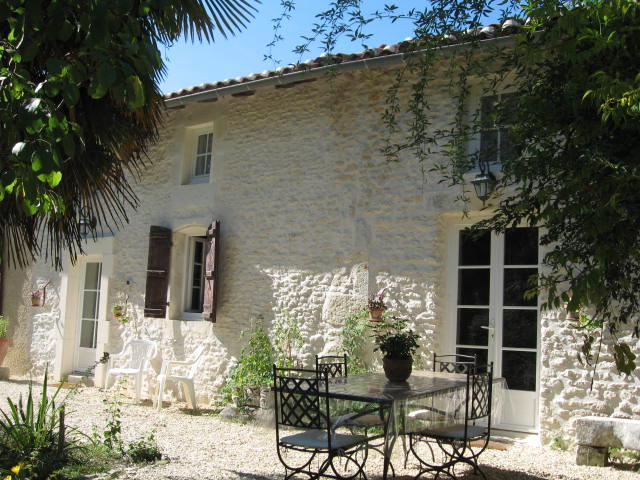
Between Saintes and Cognac is the gite you see on the left - http://www.giteducalme.com/
In Gemozac - true bourgeois mansion - http://www.alwaysonvacation.co.uk/holiday-rentals/174015.html
In the La Rochelle area - http://www.alwaysonvacation.co.uk/holiday-rentals/196846.html#photo
Nice one near La Rochelle, very good for children: http://www.alwaysonvacation.co.uk/holiday-rentals/121629.html
I like this one too: http://www.alwaysonvacation.co.uk/holiday-rentals/196844.html
If you're into bold design statements: http://www.alwaysonvacation.co.uk/holiday-rentals/628913.html
This one is advertised as Royan accommodation but it seems more like Gemozac, not bad, quite simple but well maintained - http://www.alwaysonvacation.co.uk/holiday-rentals/118403.html
Between Royan and Bordeaux - http://queensville.co.uk/La-Vieille-Grange/index.htm
Same area as above - http://gitesdegarbellant.fr/one-gite-house-barn-cottage-appartements-villas-un/default.asp
Various villas for rent on Ile-de-Re - http://www.bon-sejour-en-france.com/ile-de-re/ile-de-re-accommodation.html

My personal choices:
http://www.beaugite.com/location/pays/france/dpt17/373/infos.htm - quiet, yet close enough to beaches when driving;
north of La Rochelle, closer to Nantes airport: http://www.lamaisonenpierre.com/
In Beneze, next to Royan, one of my favorite cottages in the area: http://www.beneze.net/ ;
Fabulous place with chateau and cottages on site: http://www.chateaumouillepied.fr/ - close to Saintes;
On the already famous island Ille-de-Re: http://www.bon-sejour-en-france.com/ile-de-re/270/holidays-rental-Sainte---Marie-Cottage-Sirene-.htm ;
Something special half way between Loire Valley and the Atlantic beaches: http://www.legrandsaule.co.uk/

Links to local pages:
La Rochelle - http://www.francethisway.com/places/larochelle.php , http://www.holidays-la-rochelle.co.uk/ ;
Royan - http://www.ot-royan.fr/FRAccueil.asp?lg=UK with version in English;
Saintes - http://www.francethisway.com/places/saintes.php , http://www.ville-saintes.fr/index.php?id=725 ;
St Jean d'Angely - http://www.a-taste-of-france.com/dangley.html , http://www.frenchconnections.co.uk/en/guide/city/142817-st-jean-d-angely-charente-maritime ;
Rochefort - http://www.bernezac.com/Rochefort_uk.htm , http://www.ville-rochefort.fr/accueil - in French , http://www.francethisway.com/places/rochefort.php ;
Ile d'Aix - http://www.france-for-visitors.com/atlantic/la-rochelle/ile-d-aix.html , http://www.bernezac.com/Aix_uk.htm ;
Ile de Re - http://www.bernezac.com/Re_uk.htm , http://www.holidays-iledere.co.uk/ .

What to taste:

*Photo courtesy of www.cognacnet.com

Pineau - this is an aperitif, a type of liquor wine (mistelle or vin de liqueur) made from fresh fermenting grape juice added to brandy (Cognac eau-de-vie). The fermentation stops and the result is pineau. It's delicious and a bit tricky, limit it to a small glass prior to your meal. There are white, rose and red pineau, depending on the vines used. The white is made of Ugni Blanc, Folle Blanche and Colombard, and occasionally of Sémillon, Sauvignon Blanc and Montils. The rose and red are made of Cabernet Franc, Cabernet Sauvignon, and Merlot. Have it chilled. If you're lucky to visit in a good year, you may have the rare chance to see the harvest picked manually with the proper celebrations on the vineyards. Join, don't think twice!
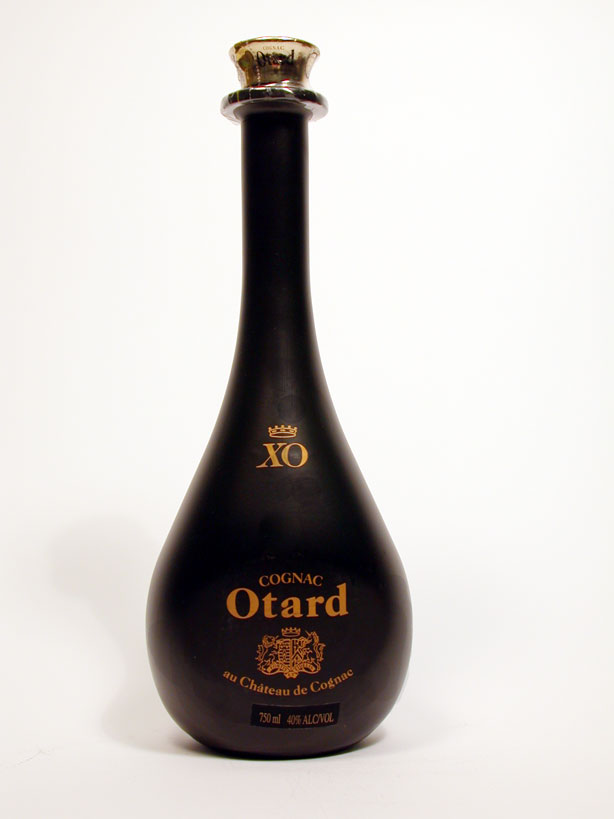


*Photo courtesy of www.beveragewarehouse.com


Cognac - this famous product of the French unmistakable taste for spirits is made of distilled wine. The vines used - white ugni, folle blanche and colombard - are grown specifically to produce material for distilling.

The distillation is double and after that the brandy ages in oak barrels. The oak gives away its tannin to the brandy and makes for the unique taste and the amber colour. The alcoholic strength drops in the dark cellars through evaporation. It's important and known as"the part for the angels". Once bottled, the ageing of cognac stops.


Finding a place where to taste both pineau and cognac is not difficult. In the bigger towns and villages there are stores offering the local produce where you will also be educated on the history of the drink. If you have time and are interested, definitely visit the town Cognac where you can enjoy tasting some of the world's finest cognacs and take a tour of the museum dedicated to the drink - http://www.westernfrancetouristboard.com/cognac.html . Driving between the small villages will also provide you with numerous opportunities - just watch for the signs. The cooperatives are always good spots and the prices are very reasonable. For more distinguished taste and atmosphere, opt for the mansions ruling over the vineyards - the signs on the roads are usually theirs.

More on food, drink and general area information here: http://www.discover-poitou-charentes.com/food-drink/local-delicacies.htm It's a lovely website which I wish all the best. In the next post I'm going to ask Tarot about the places I listed here. :)))

A sidenote: Just look at this bijou! It's a miniature castle next to Chinon: http://www.alwaysonvacation.co.uk/holiday-rentals/481440.html

Saturday, April 17, 2010

On a lazy afternoon...

On a lazy sunny afternoon I deal with whatever questions I have received regarding recent posts. There are a couple of them asking about sights and accommodation away from the main chateaux route in the Loire Valley. I look outside and see the sun is going west. So, I look west from Saumur which I chose before for a focal point of my posts, and here is what I suggest you do if you go west.

You can drive either towards Doue-la-Fontaine (and I strongly recommend you rent a car if willing to explore the side roads) or towards Mountreil-Bellay. In both cases you will pass by Cave Grolleau where you can taste some really fine wines. Then, reaching Pace, you will have to choose either road.

If you decide to go to Doue-la-Fontaine, you can also explore the Rou-Marson area and dine at the cave restaurant http://www.cavesdemarson.com/cellars.html . Although I've heard people being unhappy with the service, I personally have never had any complaints. In the village there is also a nice small castle which is often overlooked. You will then reach Les Ulmes - a tiny village with interesting stories to tell. The official website is in French: http://www.lesulmes.mairie49.fr/ but this document will give you an idea: http://www.doneohostmaking.com/Miracle/LesUlmes.pdf . Never miss a place where miracles happened for yours may be on the way! :) On the other side of the road you will see the smallest "town" in the community - Montfort. There you can taste very good wines of Anjou and the rose trees are worth seeing. Typically French, the residents of Montfort and Cizay-la-Madeleine are arguing over the ownership of Chateau of Epinats built in the XVII century. The Madeleine's website is here: http://www.cizay.la.madeleine.mairie49.fr/ .
*Photo courtesy of www.farm-cottages-holidays.com

Doue-la-Fontaine is an ancient town which was identified as an inhabited spot as early as the 7th century. There are ruins uncovered which can be seen close to the springs. In the town was located one of the oldest habitable donjon (keeps) in France, built about the year 900. The castle is believed to be the first European castle built of stone around 950.There are also troglodyte dwellings and commercial mushroom-growing caves. The Zoo is partially built within the troglodyte dwellings. Doue is titled the rose capital of France and a "Festival of the Rose" is held annually in July. More than 800 varieties of roses can be seen during the event. The official site (in French) is: http://www.ville-douelafontaine.fr/ . The zoo website has an English version: http://www.zoodoue.fr/ . There is a good hotel at the edge of the town - Hôtel De La Saulaie with a huge park and a swimming pool. There are many others, of course, but this one is what I personally know.

From Doue you can drive straight to Mountreil-Bellay and thw only village on your way will be Brossay. While there is a winery which carries the name Chateau-de-Brossay it is not located in the Brossay village. :)) It is in Cléré-sur-Layon, further west. Therefore, don't look for the Chateau or the wines in this Brossay. There is a fine chateau in another Brossay, in Bretagne. Very confusing, I know. Basically, the Loire Brossay is as off the beaten path as one can imagine. If you're looking for a quiet place, this can be it.

On the other side of this triangle is Mountreil-Bellay with its serene beauty and very good wines: http://www.chateau-montreuil-bellay.fr/index.php?/montreuilbellay/EN . Among my personal favorite spots, the town is charming, much quieter than the popular toursit attraction on the Loire itself but still offering enough of history, nature, and typical French lifestyle to satisfy many. More about the beautiful chateau and the town can be found here: http://www.chateaux-france.com/montreuilbellay . Official website: http://www.chateau-de-montreuil-bellay.fr/ . There is a pretty good hotel in the town: http://www.hotelrelaisdubellay.fr/ and if you write to them in English, they tend to respond in the same language. :)

From there you can drive a bit more to the west and visit Le-Puy-Notre-Dame - official website: http://www.ville-lepuynotredame.fr/ . For such a small town, Le-Puy-Notre-Dame offers a lot - caves, mushroom growing, museums, retro cars show, and naturally - beautiful nature. Later the town has become quite popular among foreign home buyers, so if you're on the way to buy a vacation home, now is the time. :) A very nice blog of a bed and breakfast spot is this one: http://lagrandemaison.blogspot.com/ . Another sweet blog is this one and the couple live in the village plus own gites which you can rent: http://loiregites.wordpress.com/2007/08/28/a-morning-stroll-around-le-puy-notre-dame/ .

*Photo courtesy of www.anjou-tourisme.com

In the middle between Mountreil-Bellay and Le-Puy-Notre-Dame is located Vaudelnay which is another quiet spot and where you can find this very nice accommodation: http://en.likhom.com/bnb/La-Croix-Saint-Andre/vaudelnay . The official website is: http://www.communes-francaises.com/49/vaudelnay/ and even if you don't know French, you can click on the links to check out pretty good offers for bed and breakfast or rental cottages.

Enjoy! :)

Sunday, April 11, 2010

My imaginary travelling this summer

I'm having a bad day. One of those days when I wonder why I write, why I can not settle down with a more "regular" job, why I am willing to receive scores of rejections, and last but not least - why my dreams don't lead me to a well paid profession which would allow me a dreamy vacation in the Loire Valley. To cheer myself up, I travel in my imagination. :))

*Photo courtesy of www.dailymail.co.uk

One website I absolutely love is http://www.a-castle-for-rent.com/ - mind blowing beauty! If one can stay in a true castle and play the master/mistress even if only for a week or two, why bother with hotels? I wouldn't. I only wonder if purchasing different dining sets for the outdoors has ever been considered. Somehow these plastic ones do not correspond with the rest.

www.holiday-rentals.co.uk/p413628 - this is the house I had chosen for this year's summer vacation before it became clear I wasn't going there. I love the grounds and if you have small children, they have playground too. The location is golden and the house is super comfortable. I find the price reasonable as well.

For those of you who, just like me, can not separate culinary pleasure from travelling, here are a few must-eats from the Loire Valley:
- Potted meat - it is made from pork baked in fat. It may sound terrible but it's absolutely delicious! There are different kinds in the different subregions - Le Mans' is thin and not flavored; Tours' has less fat, rougher texture and forms little cubes. The origins of the potted meat are not completely researched but in the 16th century Rabelais used the term to describe pork cubes;

- Geline de Touraine - the old unique breed of chicken also known as Dame Noire du Lochois - prepared in any possible way, it will make you rethink the meaning of "chicken";

- Farci from Poitou - it was originally produced in the Civray area between Poitiers and Confolens but can be found in Charente as well. It is usually sold in the butcher's. The Farci is a mix of vegetables, herbs, bacon, egges and flour, cooked in cabbage leaves. It is equally yummy either as a starter or as a main dish. The Farci from Poitou about two centuries old;

- Lamb's lettuce - super fine;

- Green lentils with haddock - served in every better restaurant with traditional cuisine;

- Goat cheese - the Loire Valley produces more than fifteen kinds of goat cheese. Some of the best known are Chabichou du Poitou (Chabis) - creamy when young and crumbly as ageing; Bougon - with a very specific soft skin; Sainte-Maure de Touraine - existed as far back as the 10th century and must be eaten from the farthest end, no clue why but I always follow the local customs; Crottin de Chavignol - sold in a perforated container, well complemented by herbs, soft when young, dryer as ageing, and hard and crumbly when old;

- Butter from Poitou-Charentes - never miss this at breakfast! Spread on a freshly baked croissant, this special, cream-colored, hazelnut scented butter is a delicatessen. It is produced under strict control any artificial coloring, preservatives or deacidifying substances are forbidden;

- Angelica from Niort - a plant with a fluted stem which is assigned many medicinal properties (digestive, tonic and antispasmodic). It is sold in the patisserie in the form of sugared green sticks but is also used for jam, liquors and in cooking to flavor omelets, fish, etc.

- Poitou broyé - simple and very crumbly cake;

- Cornuelles - very special small cakes with  three horns and a hole in the middle, made from a pastry by only one confectioner (recipe remains secret) - the Chizé cornuelle or the cornuelle made in pastry shell, or the cornuelle made in donut pastry, and the cornuelle made in sweetened shortcrust pastry, all are filled with confectioner's cream or chantilly cream and vanilla-, lemon- or orange flower-flavored - a must!

- Saint-Michel galettes - very simple but healthy (as much as possible for such food) and crazy popular bisquits, made od wheat and malt flours, sugar, salt, butter, eggs, yeast, glucose syrup, lactose and natural flavors;

- Macaroons from Lusignan, Montmorillon, Lussac and Cormery - my sin - insanely delicious, made of almonds, little round cakes, macaroons don't contain any flour but enough sugar to make me feel guilty for the rest of the year; there are also big ones (God forbid!) called macaronés and you can even visit the Macaroons Museum in Montmorillon - http://www.museedumacaron.com/

- Cheese crab - a specialty cake from the Poitou-Charentes area made with goat cheese and vanilla oil;

- Tarte Tatin - the well known apple tart with caramel topping which is baked upside-down - the pastry put on top of the apples.

A very friendly and informative website is http://short-breaks.by-loire-valley.com/art-de-vivre.htm - it will offer you more about food and wine in the Loire Valley plus will give you some ideas of where to stay and what to do. Another one is http://www.epiculinary.com/ - especially for good life lovers with tendency to eat and drink often. ;) This is a blog I personally always check when thinking of a Loire Valley vacation: http://lagrandemaison.blogspot.com/2009/04/selection-of-loire-restaurants-from.html Enjoy!

Wednesday, April 7, 2010

More Loire Valley castles for lovers

I read today on someone's blog it took them ten minutes to write a post. I was struck and depressed. How do people do that? It takes me more than an hour to arrange all the info, pictures and links! I am daughter of the turtles apparently. Nevertheless, I enjoy putting together the pieces and continue today with my favorite castles in the beautiful valley of the river Loire in France. I wish you can get there this summer and send me photos later. :)

* Photo courtesy of www.linternaute.com
Here is a real treat for all of us fairy tale lovers - the chateau where the Sleeping beuty was born by her creator Charles Perrault. A stunning piece of architecture, Chateau d'Usse has been furnished and arranged to reflect the Sleeping beauty fairy tale. In all the rooms you will find replicas and wax figures of characters we all know - queen and king, princess and prince, witch and fairies. The governess is there, the kitchen is still full of food, the pots are on the fire oven... Only all are fast asleep for one hundred years.


When I first visited the place I was most surprised that such a remarkable building had such an unfortunate story. The castle has been demolished and rebuilt a number of times and has exchanged many owners. Initially built as a stronghold at the edge of the Chinon forest and fortified in the eleventh century by the Norman seigneur of Usse, Gueldin de Saumur, later it passed to the Comte de Blois, who rebuilt it in stone. In the fifteenth century the ruined castle of Usse was purchased by Jean V de Bueil, a captain-general of Charles VII who began rebuilding it in the 1460s. His son Antoine de Bueil, who married Jeanne de Valois, daughter of Charles VII (and of course very rich girl!), was heavily in debt and in 1485 sold the château to Jacques d’Espinay, son of a chamberlain to the Duke of Brittany and himself chamberlain to the king. The new owner built the chapel which was completed by his son Charles in 1538.

In the seventeenth century Louis I de Valentinay demolished the north range of buildings to open the spectacular view over the parterre terrace. His son-in-law - a military engineer Vauban, liked and visited Usse often. However, the castle was passed to a new owner again - Rohan. Then in 1807 Usse was purchased by the duc de Duras.

An interesting part of the chateau history is related to the secret meetings held in 1813 by a group of Bourbon loyalists who met there to discuss the possibilities of a Bourbon Restoration. Among them were men like Trémouille, duc de Fitzjames, the prince de Polignac, Ferrand, Montmorency and the duc de Rochefoucault - names we now know from the books and which carry the romantic patina of the time. Later François de Chateaubriand worked on his Mémoires d'Outre-Tombe as the guest of duchesse Claire de Duras in the castle.

Chateau d'Usse was the inspiration for many of Walt Disney's castles too (together with others of course) ans is a favorite spot for wedding and engagement photos. This is the official website: http://www.chateaudusse.fr/ which is in French but you can always use online translator like Google's. Or you may find a button for English which I may have missed. :) Alternatively, you may check for tips and hints here: http://www.france-for-visitors.com/loire/chateau-d-usse.html and here: http://www.lvo.com/GB/MAG/CHATEAUX/USSE.HTML . One thing I strongly disagree with many online reviews is the chateau is cheesy. It is not. It is romantic and beautiful, and the gardens are fantastic. Even only the view from the courtyard is sufficiently breathtaking. So, if you are in love with someone else, yourself, or the life in general - go celebrate it there! :)

* Photo courtesy of www.francethisway.com
Chateau de Valencay is an impressive piece of architecture with beautiful gardens. Its official webiste is http://www.chateau-valencay.fr/ - in French, of course! ;) One thing I like about French is they rarely care for those of us who have forgotten their language skills at home. Learning in motion, that is. The castle was a residence of the d'Estampes and Talleyrand-Périgord families in the commune of Valencay.
The chateau sits on the edge of a plateau overlooking the little Nahon river. It was built by the d'Estampes family over a period of 200 years. Construction started in 1540 in place of the demolished 12th-century castle and was not completed until the 18th century when the south tower was added.
A rapid succession of owners followed including the notorious Scottish banker John Law. In 1803 Napoleon ordered his foreign minister Charles Maurice de Talleyrand to acquire the property so the emperor could invite and impress foreign dignitaries there - such is the power of Valencay! Surely, Ferdinand VII of Spain, who spent six pleasant years in Napoleonic captivity at Valencay, must have been delighted. :)
When the Talleyrands became owners and occupied the castle, the golden age for the chateau started. Twenty three communes were reportedly administrated by the ruling prince. When Talleyrand died in 1838, he was buried in a small mortuary chapel in the park. His descendants retained the ownership until 1952 when the male line ended. The estate was sold to an association of historic chateaux in 1979.
The chateau was spared during the German occupation thanks to the German roots of its owners. At the time it was the safe place for treasures from the Louvre (the Winged Victory of Samothrace and the Venus de Milo) to be kept. Among its most impressive features are the formal gardens which cover about forty hectares, not counting the area of Talleyrand's vineyards. Llamas, peacocks, and other exotic animals inhabit the park.

Those of you who remember their French or don't mind using an online translation service may want to check this website as well: http://www.visite-au-chateau.com/ . It provides great info about many castles and tourist sites. I will write more about the remaining castles in my next post and will add some practical and not so practical info about the Loire Valley as well. :)

Tuesday, April 6, 2010

Loire Valley castles for lovers

* Photo courtesy of www.francethisway.com

A while ago I wrote a short story about a woman whose life had turned into waiting. "Only sometimes," she was saying, "a long forgotten sound of steps under the white stone arches would reflect my youth in the waters of the river. The steps would be imaginary. The river would keep flowing undisturbed."

When I wrote it I was thinking of Chateau Chenonceau - one of the few I know which were inhabited, influenced, created, reborn, loved and left by women mostly. The history of this lovely place is a fairy tale itself but my favorite part is related to Diane de Poitiers - the mistress of Henry II who, regardless his later marriage to Catherine de Medici, remained in love with his first lover for his entire life. A rear thing among aristocrats at the time! Diane adored Chenonceau. When I visited the castle, I thought she had never left for real. Her perfume, her steps, her sighs in the lonely evenings without her lover - it was all there. If you have the chance - don't miss the opportunity to also walk the gardens in the evening when the specially chosen music will take you back through time and lives to an era of romance, intrigues, chevaliers and fallen queens. There is something magical about the mist surrounding the columns and the path on the east side. I could see the king riding this path and Diane gazing from the gallery above the water. It was an unique experience I never forgot. This is the official website of Chateau Chenonceau, an invaluable source of information and beautiful photos: http://www.chenonceau.com/


* Photo courtesy of www.travel-france-vacation.com

Another impressive chateau for me was the floating on the river Indre Chateau Azay-le-Rideau. It doesn't have such a romantic history and in fact was owned by the Mayor of Tours, Gilles Berthelot, who was also the treasurer for Francois I. The king later withdrew his favourable attitude towards the mayor and the castle was given to an army man. Still, Azay-le-Rideau has its own romantic air and big part of it is the fantastic location. The castle was built on the ruins of an older chateaux burned during the Hundred Years War. It is one of the earliest French Renaissance chateaux. Built on an island, its foundations rise straight out of the water. And there was a woman whose taste and passion were involved in the building of this bijou as well - the mayor's wife, Philippe Lesbahy, directed the course of the works. It was her who wanted the central internal staircase (escalier d'honneur) that is Azay's most beautiful feature, inspired by the staircase at Châteaudun. The Wikipedia has a nice article about the chateau here: http://en.wikipedia.org/wiki/Azay-le-Rideau .


* Photo courtesy of www.globetourguide.com

Château de Chambord is another of the Renaissance castles in the valley and the most grandeur too. It was constructed by Francois I who wanted to be near his mistress - the Comtesse de Thoury, Claude Rohan, wife of an aristocrat whose château de Muides was adjacent. It is said the carved decor of the chateau was to resemble the gentle arms of the Comtesse de Thoury.

Despite its size and mighty presence, the castle was built to serve as a hunting lodge (besides the love nest role) and was destined to loneliness. The king maintained his royal residences at Château de Blois and Château d'Amboise. There has been an ongoing argument about the original designer and architect of this remarkable building but only in the beginning of the 20th century the name of Leonardo da Vinci was associated with Château de Chambord.

One of my favourite features of Chambord - it was never intended to serve as a defense point and nothing in its design was build with the thought of war. If the king was sufficiently in love at the time or da Vinci was indeed the genius behind the delicate yet enormous structure, I don't know. What I do know is this castle has atmosphere and gentle side which are a bit surprising when one first sets one's eyes on the towers - more appropriate for a downtown sight today than for a serene river scene five centuries ago.

Sadly, the destiny of the castle was fulfilled and it was mostly empty during all these years of existence. Louis XIII gave Chambord to his brother, Gaston d'Orleans, who saved it from ruin and did a lot of restoration work; then Louis XIV restored and furnished the royal apartments and added a 1,200-horse stable, enabling him to use the castle for hunting and entertainment for a few weeks each year. Still, Louis XIV abandoned the castle too. Later Stanislas I and Maurice de Saxe inhabited the castle for a while before it feel into silence again. New owners came with more or less desire to save the great building, law suits were initiated, heirs popped up, but only after the end of the World War II Chambord received the care it deserves and today attracts thousands of people each year with its glorious yet delicate beauty. The official website of the castle is http://www.chambord.org/Chambord-en-idm-1-n-Accueil.html - in English.

In the next post, I'll tell you more of my most romantic chateaux in the Loire Valley. For now, enjoy one of the best tours organized in the area: http://www.traveloffthebeatenpath.com/loirevalleyitinerary.html